Air Pollution Control Measures (APCM) & Gas Scrubbing Solutions
Mitigating Acid Gases, VOCs, and Particulate Emissions
In the pharmaceutical, pesticide, and dye industries, managing gaseous emissions is a critical regulatory milestone. Industrial boilers, batch reactors, and process vents release highly aggressive, corrosive, and toxic gases, including Sulfur Dioxide (SO2), Hydrogen Chloride (HCl), Chlorine (Cl2), Ammonia (NH3), and volatile organic compounds (VOCs).
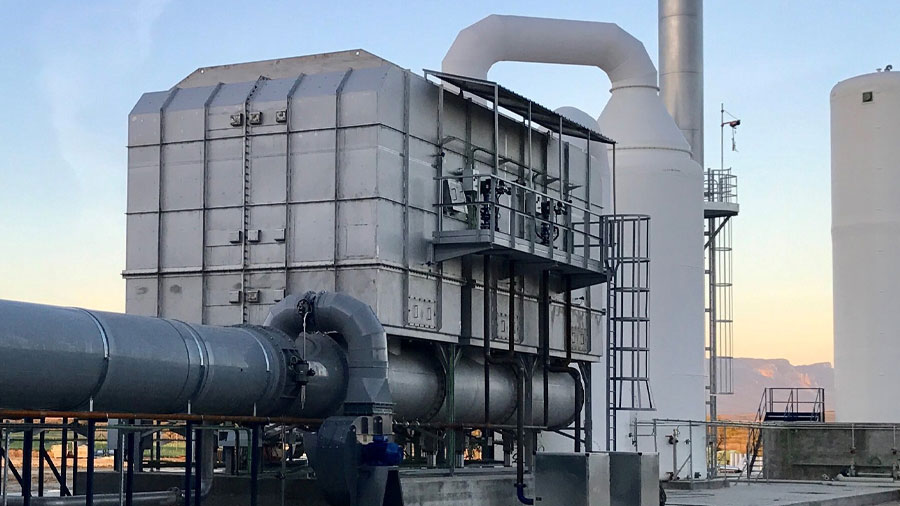
With State Pollution Control Boards (SPCBs) strictly enforcing Online Continuous Emission Monitoring Systems (OCEMS) and setting lower thresholds for stack emissions, generic solutions are a liability. We design, engineer, and install highly optimized Air Pollution Control Measures (APCM) and Multi-Stage Scrubbing Systems that guarantee absolute compliance with CPCB ambient air and stack emission norms.
Core Solution Spectrum
Our APCM portfolio ranges from particulate
control for industrial utility boilers to highly complex mass-transfer systems
for chemical synthesis processes:
1. Flue Gas Desulfurization (FGD) &
Boiler APCM
Custom-engineered systems to treat flue
gases from coal, biomass, or oil-fired boilers, dramatically reducing
Particulate Matter (PM) and acid gas concentrations.
- Particulate Capturing: Integration
of high-efficiency Cyclones, Multi-Cyclones, and Pulse-Jet Bag Filters
designed to operate under high temperatures and handle abrasive ash
particles.
- Flue Gas Scrubbing: Wet and
semi-dry scrubbing configurations achieving up to 95%+ sulfur and acid gas
removal efficiency before stack dispersion.
2. Water & Alkali Scrubbers
Engineered for the immediate neutralization
of high-concentration inorganic acid gases (HCl, H2SO4, HF) and alkaline vapors
(NH3) generated during chemical reactions.
- Water Scrubbing Systems: Utilizing
high-solubility thermodynamics to capture highly polar gases like Ammonia
or Hydrogen Chloride efficiently, optimizing water consumption through
closed-loop recirculation.
- Alkali/Chemical Neutralization:
Systems utilizing Caustic Soda (NaOH), Lime (Ca(OH)2), or Sodium Carbonate
(Na2CO3) chemistry. Features automated pH-correction loops to maintain
optimum scrubbing liquor alkalinity, ensuring constant neutralization
without chemical wastage.
3. Multi-Stage Scrubbing Systems
(Fractional & Sequential Absorption)
When process vents release a cocktail of
complex gases—typical in pesticide synthesis or pharmaceutical API
multi-product blocks—a single-stage scrubber fails. We deploy multi-stage,
sequential mass-transfer towers:
- Stage 1: Quenching & Primary Absorption: Drops incoming flue/process gas temperature and knocks down
heavy particulates or highly water-soluble gases.
- Stage 2: Chemical Absorption (Acidic/Alkaline): Targets specific gaseous pollutants via targeted chemical
reactions (e.g., handling Cl2 or SO2).
- Stage 3: Polishing / VOC Adsorption: Utilizes specialized scrubbing media or integrated activated
carbon/oxidizer beds to capture trace odorous compounds and residual VOCs
before final stack release.
Material Science & Engineering
Integrity
The Chemical Resistance Guarantee: Because pesticide, pharma, and dye emissions are highly aggressive,
we eliminate corrosion risks by selecting advanced materials of construction
based on chemical compatibility. Our systems are built using PP-FRP
(Polypropylene-Fibreglass Reinforced Plastic), PVDF-FRP, Dual Laminates,
Hastelloy, or SS316L, matching your specific gas-stream temperature and
chemistry.
- Aerodynamic & Hydraulic Balancing: Complete system engineering including static pressure drop
calculations, sizing of high-efficiency centrifugal FRP blowers, and mist
eliminator profiles to prevent liquid carry-over.
- Automation & Safety Loops:
Integrated PLC controls for liquid-to-gas (L/G) ratios, automated makeup
water dosing, dry-run protection for recirculation pumps, and gas leak
detection alarms.
- Turnkey Stack Designing: Designing
and structural fabrication of MS-FRP/RCC stacks conforming to CPCB
guidelines, equipped with safe sampling ports and platforms for seamless
OCEMS integration.